Call:+1 909 509 4388
 24/7 Emergency Service
 info@intcorecycling.com
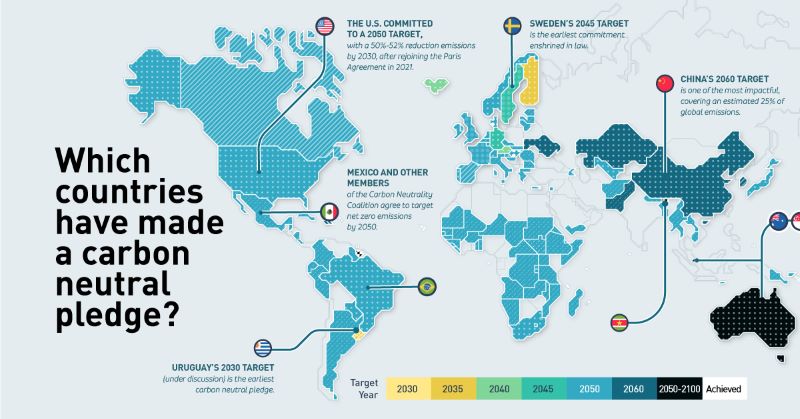
Call:+1 909 509 438824/7 Emergency Service info@intcorecycling.comRecently, INTCO Recycling, an EPS recycling expert originating in the United States, conducted a survey on the world's major EPS foam product consumption countries, referring to the policies and methods of handling EPS in more than 20 countries and regions, such as recycling, landfill or incineration. In the context of global carbon neutrality goals and circular economy, the white paper on EPS burning and landfill policies has far-reaching significance.
Japan
Since the 1970s, Japan has promoted the classification of garbage for the whole people, and the treatment, recycling, and reuse of different garbage is in line with the national conditions of the rational use of resources. In Japan, due to the high threshold for landfill and burning, it is not possible to landfill and burning, and almost all EPS are recycled. EPS can be landfilled and burned in Japan.
Korea
Due to landfill and burning policy & excessive demand, almost all EPS are recycled in Korea, and professional EPS recycling machines such as EPS Compactor, EPS Densifier are equipped with factories there. EPS can be landfilled and burned in Korea.

Taiwan
Like Korea, Taiwan also has a mature landfill and burning policy and excessive demand of EPS, which can be burned but can not be landfilled.
China
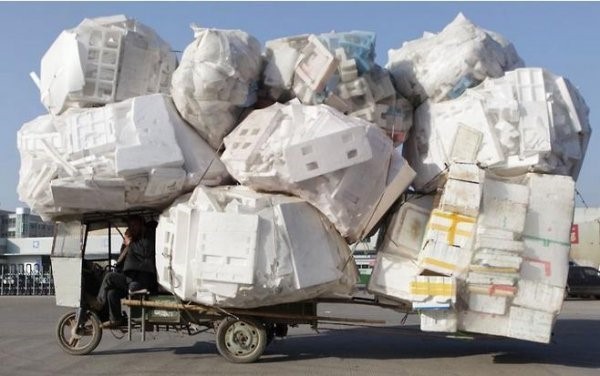
China is a country with large resources and population, and it is also a large consumer of EPS products. The EPS waste generated every year is also increasing year by year. So where did the EPS waste go? As the nationwide garbage sorting has just risen, the laws and policies on environmental protection are still immature in China, EPS can be landfilled and burned here. However, due to excessive market demand, EPS recycling has become the general trend nationwide.
Malaysia
EPS can be landfilled, most of them are landfilled, there is no burning plant. There is no incinerator that can be widely used in Malaysia.
Dubai
EPS can be landfilled, most of them are landfilled, and there is no burning plant.
Belgium
EPS cannot be landfilled and burned, all must be recycled
France
The French government is committed to encouraging the elimination of problematic or unnecessary plastic packaging, starting with the ban on the use of EPS in food containers and single-use plastic cups, but also by encouraging the elimination of PVC in household, commercial and industrial packaging by 2022.
EPS basically cannot be landfilled and can be burned in France, but due to market demand & potential circular chances forced & future burning policy, almost all EPS is recycled. Recycling of EPS has gained its growing popularity to dispose of polystyrene waste in France and other European countries, but the problem of the cost of transport is still relevant, due to its large volume and lightness.
Holland
Spain
EPS can be landfilled and basically not burned. Due to market demand & potential circular chances forced, the EPS recycling rate is relatively high.
Poland
Italy
EPS basically cannot be landfilled, but can be burned, and the burning fee is not expansive.
Denmark & Norway & Sweden
EPS cannot be landfilled but can be burned, and the proportion of burning accounts for more than 50%.
Finland & Iceland
EPS can be landfilled or burned, and EPS landfill accounts for half of the total.
Canada BC
EPS cannot be landfilled and burned, all must be recycled.
Canada AB
West America
East America
Central America
Eastern Canada
EPS can be landfilled, basically no burning
Mexico
Chile
EPS can be landfilled, most of them are landfilled, there is no burning plant.
Australia
New Zealand
EPS can be landfilled, basically no burning
With the rising demand for the development of a circular economy worldwide and the urgent realization of the global carbon neutral goal, the prohibition of landfill and incineration of waste EPS must be the general trend, and the search for more green and environmentally friendly treatment methods-that is, EPS Recycling and reusing will be Ushered in a major explosion in the industry. If you are also troubled by how to deal with the bulky EPS waste with a high disposing fees, a professional polystyrene recycling machine may be a good choice, like the EPS Compactor or EPS Densifier mentioned in the Korea part.
Rebirth of Foam (ROF) was established on March 18, 2020, committed to promoting the recycling of waste foam worldwide - waste foam can be 100% recycled and then reused to make valuable new products, thereby achieving the goal of zero waste and sustainable development of the global circular economy. There are currently 20 members of ROF, mainly American foam recycling organizations and companies. Now you are welcome to join us to make the world greener and healthier.