Call:+1 909 509 4388
 24/7 Emergency Service
 info@intcorecycling.com
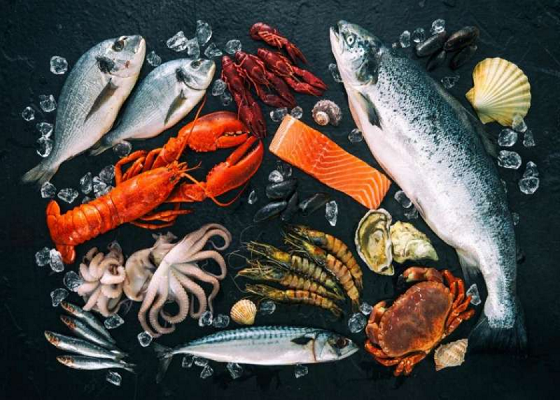
Call:+1 909 509 438824/7 Emergency Service info@intcorecycling.comFish products and aquaculture products are important sources of protein and an important part of a healthy diet. This is especially true for ordinary people living in the European Union, who consume 24.4 kilograms of fish or seafood per person per year (4 kilograms more than the rest of the world). It can be seen that Europeans are loyal fans of fish and seafood, so do you know the transportation process from the moment that a fish is caught from the sea to when it becomes your dish?
The material and wide use of fish box
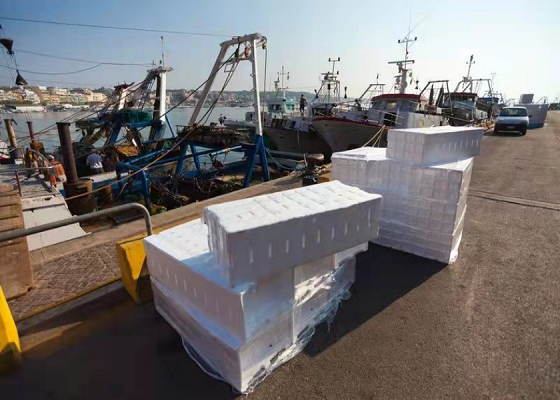
During the transportation of fish and seafood products, the requirements for transportation containers are very demanding. EPS fish box is widely used in the transportation of fish and seafood products from the ocean to global sales counters. EPS is also a kind of foam. The EPS fish box deserves to be the preferred solution for protecting fish and other seafood. They provide a simple but efficient solution. The material itself is very light and easy to transport goods. Although light not lacking in impact resistance, it can protect the goods from physical shocks. Its isothermal performance can keep the fish fresh and cool, so it is very suitable for cold chain transportation. The use rate of this kind of foam fish box is extremely high, and it can be said that it is favored by almost all fishery operators. Take Boulogne Sur Mer, the largest port in France, for example. In 2020, the fishing volume of fish alone will be as high as 45,000 tons. According to the large-capacity EPS fish box, each fish box can hold 20kg of fish, and it will need 2.25 million EPS fish boxes per year. It's just the number of fish boxes produced by a port in a country every year! Another example is the port of Hanstholm in Denmark, where 150 tons of EPS waste is generated annually, or 8,500 m 3.
The damage of foam fish box to the environment and human health
Due to the massive use of foam fish boxes, some fish boxes have not been properly disposed of. Traditional foam recycling methods include incineration and landfill. The process of incineration of foam produces a large amount of toxic gas that is not only harmful to the human respiratory system but also excessive carbon dioxide will also be produced to cause the greenhouse effect.[1] In addition, it takes hundreds of years to degrade the foam. This shows that landfilling this foam recycling method is also a bad idea. Microplastics infiltrate everywhere in the oceans of the globe: they even pollute one of the most remote terrestrial ecosystems, in Antarctica, according to a study published Wednesday, June 24, 2020. Scientists have indeed found fragments of polystyrene (Raw materials for EPS) in the bowels springtails. In fact, this biology only exists in the soil of Antarctica-the part that is not covered by ice, which accounts for less than 1% of the territory[2], "Ingestion of microplastics means that these man-made materials have penetrated into the soil food chain." It makes people afraid that foam pollution has become pervasive. As human beings are at the top of the food chain, there will eventually be a day when these plastic particles will enter our bodies as we ingest foods. There is no report that shows that human ingestion of plastic particles is harmless to health!

New foam recycling methods from two recycling companies
How should we complete foam recycling? What can we do to protect our environment and human health? Science and technology are already in action. Recently, the European Commission praised a foam recycling company based in Denmark, Recyclepit[1]. This company has used technological innovation to completely turn EPS fish boxes into treasure. The managing director of the company is responsible for collecting EPS waste from various fishing ports, then compressing and transporting it to southern Europe. He discovered that through a special melting process, EPS can be turned into PS (polystyrene) particles, which can be used to make many plastic products. Denmark has a great demand for this material in the industry. He seized this opportunity to really recycle EPS, and he found an investor to develop Denmark’s first factory to recycle EPS foam into PS pellets. It can convert up to 4,200 tons of EPS per year. It has processed 150 tons of EPS from the port of Hanstholm and other ports in Denmark, and 2,500 tons of EPS from the fisheries of neighboring countries.
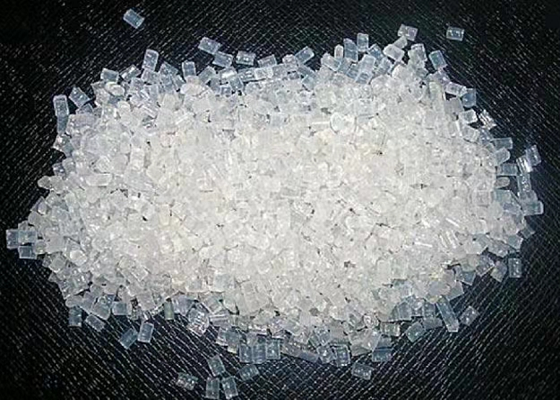
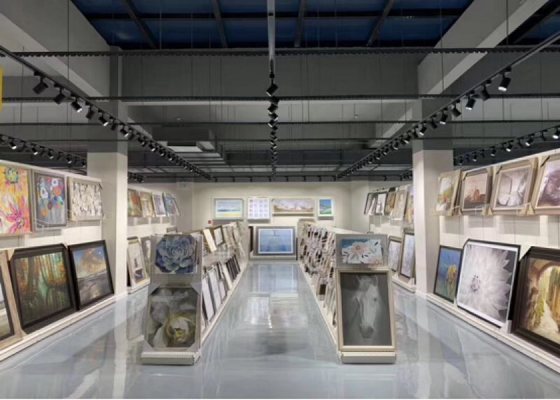
Coincidentally, a foam recycling company, INTCO Recycling[2], in China also adopted this similar recycling method. The foam recycling method they introduced is more detailed and impressive. They use professional foam recycling machine called foam compactor or foam densifier and then granulate it. Use PS particles to make some decorations, mirror frames and, photo frames! This dirty rubbish turned into pieces of exquisite crafts under the company's creativity.
How could we participate in the action of foam recycling?
So how do we contribute to foam recycling in life? From the government level, the government can formulate some policies related to foam recycling to restrict landfill and incineration, and impose corresponding penalties on the behavior of randomly discarding waste. It can also do some popular science about foam recycling on a regular basis to let everyone know more environmentally friendly recycling methods, in addition, some subsidy policies can be formulated to reward companies that use more environmentally friendly foam recycling methods. From the enterprise level, we can consider whether it is possible to purchase foam recycling machines in order to process waste in time. From the personal level, what we have to do is to classify this foam waste and put it in a fixed place. Do not mix it with other types of garbage in the foam recycling location.