Call:+1 909 509 4388
 24/7 Emergency Service
 info@intcorecycling.com
Call:+1 909 509 438824/7 Emergency Service info@intcorecycling.comIn recent years, the term foam recycling has gradually appeared in the public's field of vision. More and more countries have begun to pay attention to the problem of foam recycling because the damage to the ecological environment even animals and human without foam recycling is too serious. There has been an endless stream of news about the harm caused by foam pollution to them.
The impact of foam pollution on animals
First taking birds as an example. They are easily attracted by the foam packaging that contains food. The residual aroma on the foam packaging makes them mistakenly believe that these foams are edible.

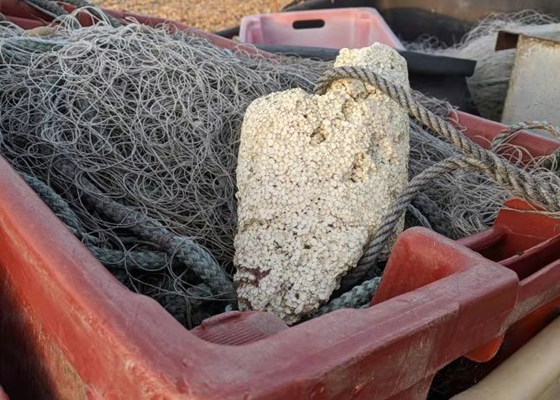
Because the foam is a light material, when the bird’s beak bites the foam, the foam is easily broken into small pieces. Its journey may not stop there if it is picked up by the wind and flies into the seas. The little pieces that can be eaten by the animals in the sea that confuse it for food or just because of curiosity. The foam stays in the animal's stomach until it dies. Hundreds of pieces of foam can be found in its body. Scientists have found plastic fragments (most of the material is foam) in hundreds of species, including 86% of sea turtle species, 44% of seabird species, and 43% of marine mammal species. Ingestion of these fragments is usually fatal. When animals eat too much indigestible plastic, they will starve to death because they refuse to eat because of a strong sense of fullness. The foam may also block their digestive tract, causing them to die in pain.
The impact of foam pollution on human
If you think that not doing foam recycling is only harmful to animals, then you are wrong. Take the fish in the ocean as an example, foam that exists in the ocean for a long time, then some microplastic particles will be produced, microplastics are plastics with a diameter of fewer than 5 millimeters. These microplastics continue to decompose over time and become smaller and smaller, so small that they can be ingested by marine animals, which means that the microplastic particles have successfully entered the food chain, one day, they will enter the human body along with the internal circulation of it.
According to a 2017 UN report, there are more than 51 trillion microplastic particles in the ocean, more than 500 times the number of stars in the Milky Way. In the process of collecting relevant information, Rebirth of Foam found that an academic report pointed out that there is a kind of microplastic particles produced by foam (polystyrene foam) if it enters the human body, which will affect the blood coagulation function of the person. The association of the microplastic particles with blood coagulation proteins may influence the natural balance between pro-and anticoagulant pathways. After listening to this, do you still think that foam recycling is unnecessary?
Damage to human caused by wrong foam recycling methods
Some people will say that their area has adopted foam recycling measures and did not randomly discard white waste. But are these foam recycling methods correct? The common traditional foam recycling methods are landfill and incineration. These two foam recycling methods are not worth promoting because they will cause harm to human health.
Landfill
Over time, the earth's crust will move, so the buried foam is likely to reach the ocean. Therefore, this method of landfilling is equivalent to throwing the foam in a place where we can’t see it. There is not much difference from discarding at will.
Incineration
When the foam is burned, more than 90 different dangerous chemicals are released. The impact is huge, and it is harmful to the health of anyone who burns at the scene. The first is carbon monoxide. According to the U.S. Environmental Protection Agency (EPA), carbon monoxide is an undetectable gas that can kill you before you realize its existence. Then styrene vapor affects the senses, especially the eyes, and it also hurts the central nervous system. EPA is currently investigating the possible correlation between styrene and cancer. Another major harmful substance is polycyclic aromatic hydrocarbons (PAH), which can cause harm to the human reproductive system.
Machinery recycling method for foam recycling
According to the data survey of Rebirth of Foam, it is found that this method has gradually entered the public in recent years and many related industries are using this method for foam recycling. This foam recycling method is very friendly to the ecological environment. And the operation process of this recycling method, which is not harmful to human health. The operation process of this recycling method is roughly like this: First, we have to prepare a machine for foam recycling (if you only want to know the type of machine, you can refer to an article published by Rebirth of Foam) Through this recycling machine, we can squeeze out the air in the foam to compact the foam and then use these compressed foams for granulation. Granulation is to make these foams into plastic particles through a series of professional operations, and then make different kinds of new plastic products according to the properties of these plastic particles.

There is a company that uses this recycling method to make photo frames from waste foam. They both provide machines and recycle waste for remanufacturing. They use the mechanical recycling method perfectly. So there is no real waste, only misplaced resources.